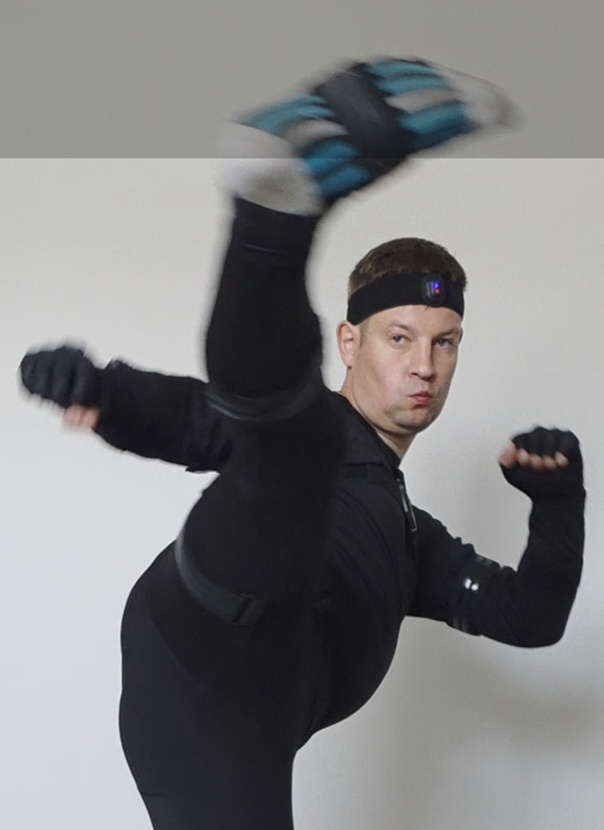
This article is based on our publication from the Journal of Human Kinetics (2021). Training in combat sports is frequently divided into executing techniques "dry" (in the air) versus striking gear. The aim of this study was to examine how the type of target influences the maximum velocity of the foot, knee, and hip during the execution of a roundhouse kick.
How Did We Conduct the Study?
The study included 15 elite male athletes practicing Taekwon-do. Their body movements were recorded using advanced stereophotogrammetry equipment. We investigated three different striking conditions: kicking into the air (no target), kicking a small ping-pong ball, and kicking a heavy training pad.
Key Discoveries
- The highest maximum foot velocity was achieved by athletes when striking the heavy training pad.
- The roundhouse kick exhibits a "target effect" – meaning that the mere presence of a physical object (and the varying resistance it offers) drastically alters the movement parameters of the entire kinetic system, not just the foot itself.
What Does This Mean in Practice?
These results show coaches and athletes that striking "into the air" entails completely different specifics regarding the neuromuscular system. To fully activate their speed potential and generate maximum striking power, an athlete needs a physical target. Training with a pad teaches the nervous system how to overcome resistance, which translates into genuine punch dynamics.
Wąsik J., Mosler D., Ortenburger D., Góra T., Cholewa J. (2021). Kinematic Effects of the Target on the Velocity of Taekwon-Do Roundhouse Kicks. Journal of Human Kinetics, 80, 61-69.