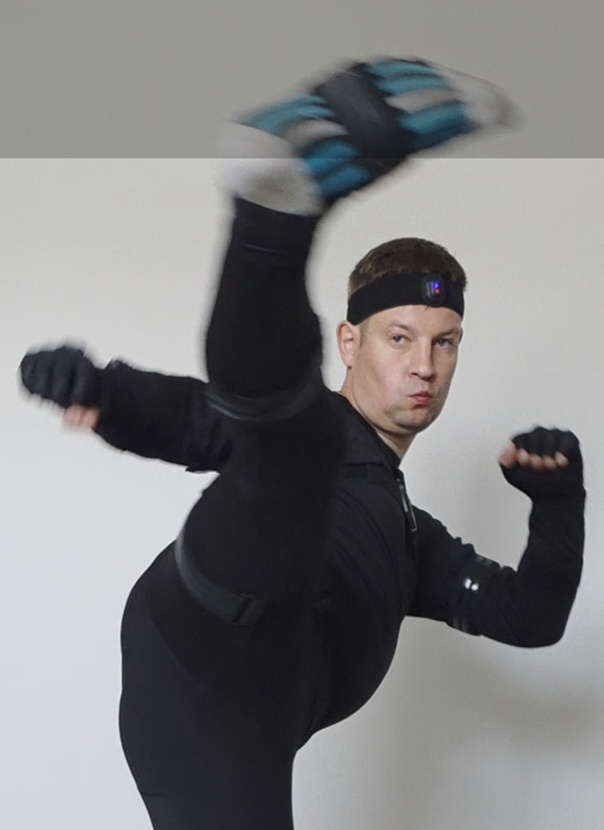
Budo historically had to keep fighting after injury — an open system for impaired bodies avant la lettre. This 2019 paper proposes a new way to assess karate competitors with disabilities that could replace the World Karate Federation’s coarse 3-grade point system.
Functional 21-grade idea
Using video and Kinovea, the authors outline a 21-grade point-adding system based on range of motion and technique speed. ICD-10 labels (e.g. a single cerebral-palsy bucket) hide motor differences that matter on the kata floor. Wheelchair-user kata was a focal discussion: keep medal value with simple categorisation, but improve fairness with finer functional scoring — work discussed since 2014 and presented at the Japanese Academy of Budo (2017).
Why it helps karate and people with disabilities
Fairer classification protects competitive integrity and dignity. Referees gain insight beyond mandatory checkboxes. The conclusion: functional video assessment may bring regulations closer to fairness that diagnostic categories alone cannot reach.
Limits
Proposal and developmental discussion, not a finished Paralympic statute. No DOI in Crossref; cite 15:1–8 and the SMAES abstract.
Keeping medal value while refining fairness is the political-technical tension the authors name: too many micro-classes empty the podium of meaning; too few grades erase motor reality. The 21-grade ROM-and-speed idea tries to walk that ridge for wheelchair kata first.
Kinovea-based video review is accessible technology — important if classification is to scale beyond elite labs. Referees gain observable criteria instead of only paperwork categories.
Cite Arch Budo Sci Martial Arts Extreme Sports 2019;15:1–8 (Matsui, Mimura, Arakawa, Mosler) when you brief federation working groups.
Keeping medal value while refining fairness is the political-technical tension the authors name: too many micro-classes empty the podium of meaning; too few grades erase motor reality. The 21-grade ROM-and-speed idea tries to walk that ridge for wheelchair kata first.
Kinovea-based video review is accessible technology — important if classification is to scale beyond elite labs. Referees gain observable criteria instead of only paperwork categories.
Cite Arch Budo Sci Martial Arts Extreme Sports 2019;15:1–8 (Matsui, Mimura, Arakawa, Mosler) when you brief federation working groups.
Where this sits in the lab
Biokineticum’s public notes exist so practitioners can reach the DOI without drowning in jargon — and so athletes, teachers and clinicians see that combat-sport science also publishes on prisons, faith, fair play, sauna physiology and disability policy. Soft topics still deserve hard methods: sample sizes, instruments, effect directions and explicit limits.
If you teach, treat or coach from these findings, copy the reference list into your syllabus, open the full text, and write down what you will measure next week. That is the only CTA that always fits.
Reading notes
Psychosocial and public-health papers describe associations in defined samples — not moral verdicts about individuals. We keep the language descriptive, avoid stigma, and point you to the DOI for methods and limits.
If the topic touches your clinic, classroom or programme design, treat this post as a map to the paper, not a substitute for it.
References
- Matsui K, Mimura Y, Arakawa T, Mosler D. An insight into the rule-defining process of Paralympic Karate and its benefits on karate and people with disabilities. Archives of Budo Science of Martial Arts and Extreme Sports. 2019. 15:1-8. Full text / abstract
Measurement-led biomechanics, health psychology and clinical tools at Biokineticum.