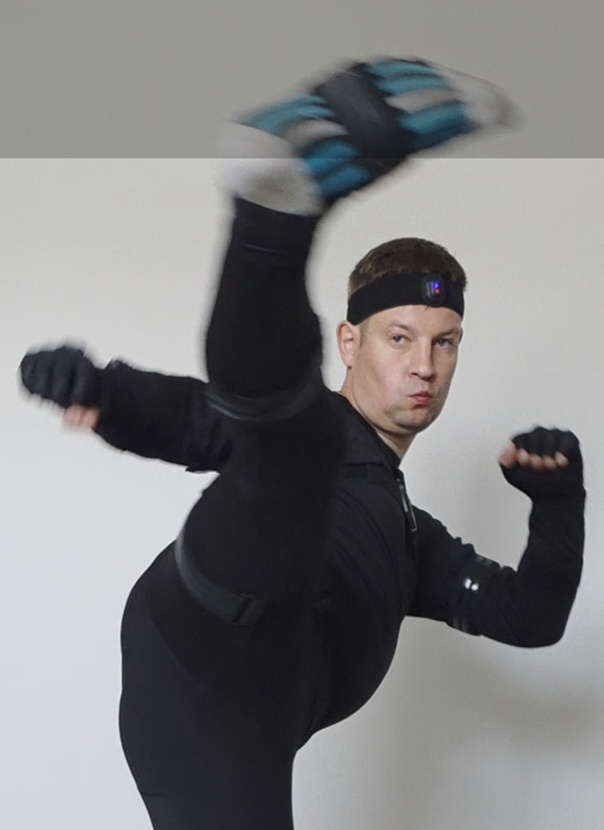
Combat-sport folklore loves the idea that “angry hits harder”. We tested it. Thirty taekwondo athletes (6 women, 24 men; mean age 27.07 ± 6.42 years) kicked a force plate with front, roundhouse and side kicks on both legs, and completed the Buss–Perry Aggression Questionnaire (BPAQ).
In the regression for total kicking force (R² = 0.53, p < 0.001), sex and age were significant predictors; aggression was not. Men generated significantly higher forces on average. That is a pilot, unbalanced by sex — read it as a brake on motivational fairy tales, not a final psychology of striking.
What coaches should not do
Do not programme intensity from questionnaire aggression scores. Do programme strength, technique and age-appropriate loading. If an athlete needs psychological support, that is a separate lane from Newton-metres on a plate.
Limits
Pilot sample, mostly men, laboratory kicks. Aggression is multi-dimensional; BPAQ total/subscales are not “fight IQ”. We publish negative-ish findings on purpose — they keep training honest.
The psychological attractor is strong: coaches still talk as if hostility were a force multiplier. BPAQ scores capture self-reported aggression dimensions; they are not electromyography of intent. In this pilot the biomechanical side was thorough — front, roundhouse and side kicks, both legs, maximal efforts on a plate — while the regression answer on aggression was bluntly null once sex and age were in the model.
Men produced higher forces; age also entered. That can reflect training history, muscle mass distributions, or sample composition (24 men vs 6 women). Do not weaponise the sex coefficient as a moral claim. Do use it as a reminder to stratify analyses and programmes.
If an athlete presents with anger dysregulation, refer appropriately. If an athlete wants harder kicks, fix stance, timing, strength and effective mass. Motivational shouting remains optional theatre.
Independent-samples tests and multiple regression (p < 0.05 threshold) were the statistical backbone. Front, roundhouse and side kicks on both legs give a broader “total force” construct than a single technique fetish. Publish the null on aggression so the next coach is less tempted to confuse psychology questionnaires with kinetic chain physics.
How to read this without Instagram physics
Popular posts about martial arts love single numbers. Peer-reviewed combat-sport papers usually deliver distributions, small elite samples, and caveats. When we quote a median or a mean here, it is a laboratory reading under a stated protocol — pad or plate geometry, instruction to go maximal, a defined stance. Change the instruction or the target and the number moves. That is not a failure of science; it is why measurement exists.
Biokineticum’s role in these projects is the same as on the clinic floor: prefer a boring sensor over a loud opinion. If you want help instrumenting kicks or punches, or you need a physiotherapist who also writes the analysis code, the contact page is the honest next step — not a promise that your next roundhouse will match a table in Scientific Reports.
Final filter: if one table makes you rewrite an entire mesocycle or clinic pathway, pause. A single paper is a coordinate, not a season plan. Cross-check effect direction against the other ORCID-series posts, open the DOI, then edit the syllabus. We would rather see three coherent measurement sessions than one dramatic chart cropped for social media.
References
- Wąsik J, Kuśnierz C, Radecki K, Mosler D. Determinants of kicking force in taekwon-do: a pilot study on the role of aggression, sex, and age. Physical Activity Review. 2026. doi:10.16926/par.2026.14.19
Measurement-led biomechanics and clinical tools at Biokineticum.