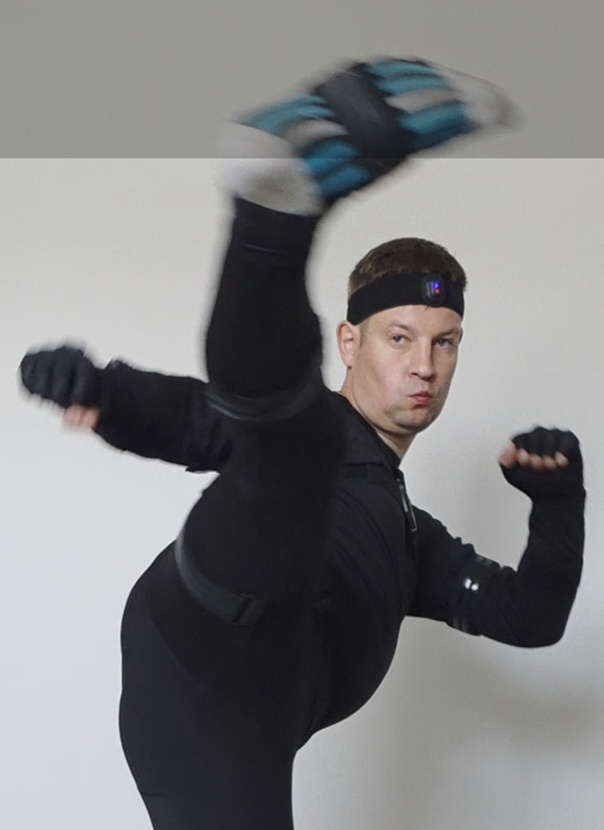
This article draws from research published in 2017. Although I routinely analyze the movements of elite athletes, biomechanics critically plays an essential role in safeguarding the health of individuals in vital risk groups. Individuals over the age of 60, alongside patients struggling with musculoskeletal, visual, or auditory dysfunctions, are considerably susceptible to profoundly dangerous collisions (e.g., encountering an oncoming cyclist or a runner).
Methodology: Safe Testing via VR
In an active clinical environment, we absolutely cannot fling objects at a patient to gauge their reflexes safely. Yet, technology steps in. We effectively leveraged Virtual Reality (VR) to conjure pristine simulations of moving objects violently accelerating towards a patient's head (precisely imitating a punch, a flying ball, or an approaching vehicle).
What Does This Tool Yield?
- Assessing Compensatory Capabilities: By utilizing VR goggles, we impeccably deceive the patient's labyrinth and visual systems, robustly coercing their body into generating a visceral, natural evasive reflex. Simultaneously, poised on secure ground, we distinctly measure their fundamental balance metrics and reaction speed.
- Diagnostics and Training: Not only does this system meticulously diagnose how a patient biologically handles spontaneous hazards, but it uniquely empowers us to train these crucial reactions securely—functioning as an immensely powerful asset in mitigating physical injury prophylaxis.
Future Implications
The remarkable fusion of biomedical engineering, virtual reality, and modern physiotherapy genuinely unlocks entirely novel vistas in rehabilitation logic. It effectively allows professionals to simulate treacherous street or sports configurations inside an utterly controlled, sterile laboratory ecosystem, successfully teaching the nervous system immaculate defensive reflexes.
Michnik R., Wodarski P., Bieniek A., Jurkojć J., Mosler D., Kalina R.M. (2017). Effectiveness of avoiding collision with an object in motion - virtual reality technology in diagnostic and training from perspective of prophylactic of body injuries.