📌 Key Takeaways from Scientific Literature
- Clinical Equivalence: Systematic reviews (Cochrane, JOSPT) show telerehabilitation achieves statistically comparable pain reduction and functional recovery to in-person therapy for chronic low back pain, osteoarthritis, and post-operative orthopedic recovery.
- Active vs. Passive Therapy: Modern physiotherapy focuses on neuromuscular re-education, motor control, and progressive loading—interventions that do not require physical touch.
- Higher Adherence: Home-based remote interventions report up to 25% higher compliance due to eliminated commute times and immediate integration into daily routines.
- Objective Measurement: Real-time computer vision analysis allows therapists to measure Range of Motion (ROM) and postural sway with clinical accuracy.
For decades, the public perceived physical therapy exclusively as manual manipulation—a hands-on discipline where a clinician physically manipulates joints and soft tissues. However, modern medical research has sparked a fundamental paradigm shift. Contemporary physiotherapy is rooted in Evidence-Based Practice (EBP), prioritizing active motor control, biomechanical neuromuscular re-education, load management, and progressive exercise prescription over passive modalities.
This scientific transition opens a crucial question: Can physical therapy delivered remotely via video conferenced telerehabilitation match the clinical efficacy of conventional in-clinic visits?
1. What the Meta-Analyses Say: Pain Reduction & Functional Recovery
To answer this rigorously, researchers have conducted large-scale systematic reviews aggregating dozens of randomized controlled trials (RCTs).
Similar findings have been documented across specific conditions:
- Chronic Low Back Pain (CLBP): Dario et al. (2017) demonstrated that remote exercise therapy combined with education achieved long-term disability score improvements (Oswestry Disability Index) identical to in-clinic cohorts.
- Knee & Hip Osteoarthritis: A large multi-center study by Bennell et al. (2017) demonstrated that internet-delivered physical therapy yielded clinically meaningful improvements in physical function and quality of life that persisted at 12-month follow-up.
- Post-Surgical Rehabilitation (TKA / ACL Reconstruction): Russell et al. (2011) examined total knee arthroplasty patients and observed identical gains in knee extension/flexion Range of Motion (ROM) and quadriceps strength between tele-rehab and in-person groups.
2. Why Does Telerehabilitation Work So Well?
The success of remote physiotherapy is explained by core biomechanical and neurophysiological principles:
- Motor Learning & Self-Efficacy: When patients perform exercises in their actual living environment rather than an artificial clinical setting, neurological retention and functional transfer to daily tasks are significantly higher.
- Active Patient Engagement: Passive therapies (e.g. passive ultrasound or unassisted stretching) often create patient dependency. Telerehabilitation fosters patient autonomy and active movement ownership, which is the primary predictor of long-term recovery.
- Continuous Biomechanical Feedback: Through real-time video, the physiotherapist analyzes movement paths, joint angular velocities, and compensatory movement patterns, giving immediate verbal and visual cueing.
Experience Evidence-Based Telerehabilitation
Get a comprehensive diagnostic evaluation of your movement, posture, and pain triggers using real-time AI kinematics—from the comfort of your home.
Book an Encrypted Online Visit ($25 / ~100 PLN) →3. Overcoming the Limitations: The Role of Computer Vision & AI
The primary critique of traditional video consultations has been the difficulty of obtaining precise numerical measurements (e.g., exact degrees of joint flexion or center of mass sway).
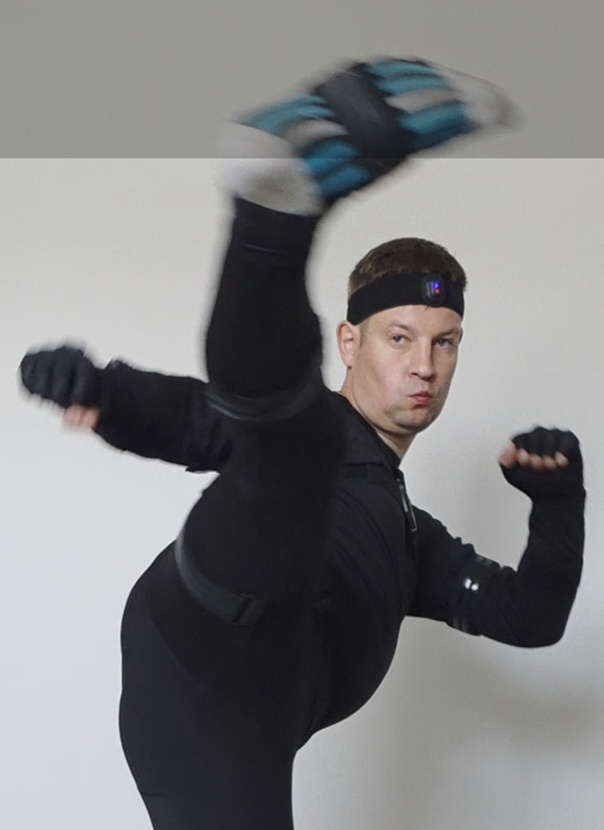
At Biokineticum, we bridge this gap by integrating real-time Machine Learning (YOLOv8 pose estimation) into our remote sessions. Our system extracts coordinate landmarks and computes joint angles and balance sway in real-time. This eliminates guesswork and delivers objective laboratory-level kinematics directly over your video call.
4. Summary: Who Benefits Most from Telerehabilitation?
Evidence-based telerehabilitation is exceptionally suited for:
- Athletes and active individuals needing movement optimization and injury prevention protocols.
- Patients managing chronic spinal pain, neck stiffness, or joint impingement.
- Post-operative patients requiring guided exercise progression and range-of-motion tracking.
- Expats and remote professionals seeking world-class academic physiotherapy without geographical boundaries.
1. Cottrell, M. A., Galea, O. A., O’Leary, S. P., Hill, A. J., & Russell, T. G. (2017). Real-time telerehabilitation for the treatment of musculoskeletal conditions is effective and comparable to standard practice: a systematic review and meta-analysis. Clinical Rehabilitation, 31(5), 625-638.
2. Seron, P., Oliveros, M. J., Gutierrez-Arias, R., Fuentes-Aspe, R., et al. (2021). Effectiveness of telerehabilitation in physical therapy: A rapid overview. Physical Therapy, 101(6), pzab053.
3. Bennell, K. L., Nelligan, R., Dobson, F., et al. (2017). Effectiveness of an internet-delivered exercise and pain-coping skills training program for people with chronic knee pain. Annals of Internal Medicine, 166(7), 453-462.
4. Dario, A. B., Moreti-Cabral, C. M., et al. (2017). Effectiveness of telehealth-based interventions in the management of non-specific low back pain: a systematic review. Spine Journal, 17(9), 1342-1351.